Core Components of a Professional Radio Setup
Transmitters and Antenna Systems
Broadcasting is not a passive act; it is a deliberate projection of a voice into the void, hoping to find an echo. The transmitter serves as the initial pulse, the point where your audio transforms into electromagnetic energy. Selecting the correct power amplifier and exciter determines your reach, but the true presence of your signal is dictated downstream. You might spend hours on the audio chain, yet a poorly tuned amplifier is akin to a magnificent orator speaking into a fathomless pit.
As we consider the specifics of procurement, the antenna system becomes the physical manifestation of your intent. The vertical radiation pattern, the gain, and the bandwidth are not arbitrary numbers; they are the architecture of your audience. That said, the market is flush with options, and finding the right radio broadcast equipment for sale requires a ruthless assessment of your environment. Do you need a circularly polarized system for dense urban canyons, or a high-gain directional array to span the open veld?
The technicalities matter, but the quiet obsession lies in the finesse of the system. A transmitter running at full power is a brute; the magic is in the modulation. When assessing potential assets, I look for the nuance rather than the wattage.
– Evaluate the phase noise; it defines the clarity against adjacent channels.
– Check the efficiency of the power supply, as heat is your silent, constant adversary.
– Confirm the interface capabilities, specifically for remote diagnostics.
Connecting these elements is the transmission line, a conduit where every decibel of loss is a point of separation from your listener. The psychological weight of a signal that just reaches the fringe is immense. When sourcing radio broadcast equipment for sale, consider the gestalt of these components; the transmitter and antenna must act as a single, unified organism. A mismatch here creates a standing wave ratio that undermines your entire operation, turning a promise of coverage into a technical footnote. Ultimately, the hardware is merely the vessel, but it must be a worthy one.
Audio Mixers and Control Surfaces
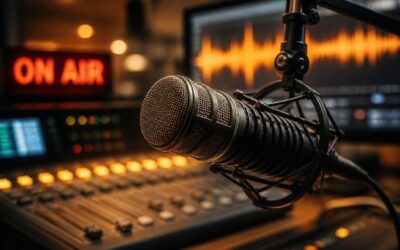
The mixer is where your signal gains its character. After the antenna projects your voice, the control surface shapes what the listener perceives. I often tell engineers that a console is a negotiation between source and silence, not a collection of knobs. Clean preamps and accurate metering matter more than the number of channels.
When evaluating radio broadcast equipment for sale, look for flexible routing and reliable talkback systems. A digital control surface with instant recall saves you during live broadcasts, but the tactile response of a physical fader still matters. Consider these features:
- Dedicated cue sections for monitoring multiple sources
- Smooth fader taper for precise level adjustments
- Redundant power supplies to prevent dead air
Your mixer must handle unexpected phone calls, remote feeds, and studio guests without hesitation. The right console becomes an extension of your ears, giving you command over every moment of the broadcast.
Microphones and Headphones for Broadcast
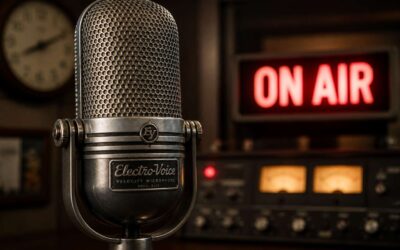
The human voice carries emotion in micro-details, the breath before a sentence, the click of a tongue. A microphone and headphone pair either preserves these cues or flattens them. Dynamic microphones handle high sound pressure levels. Condenser microphones capture transient detail and air. A cardioid pickup pattern rejects room ambience, which matters in a home studio or a busy newsroom.
Headphones are the other half of the interface. Closed-back designs prevent audio bleed into the live microphone, a critical flaw when you are talking and monitoring at once. An open-back pair sounds natural but leaks sound. When browsing radio broadcast equipment for sale, check the impedance rating and the clamping force. A four hour session with tight headphones is a distraction!
- Dynamic microphones for loud, untreated rooms
- Condenser microphones for controlled studio acoustics
- Closed-back headphones for isolation during broadcasts
When you search for radio broadcast equipment for sale, pay attention to transient response and distortion curves. Those numbers tell you more than any brand name.
Processing and Monitoring Tools
The processing stage is where your broadcast gains its signature punch. A compressor tames unpredictable vocal spikes, while an equalizer carves space for the human voice within a crowded mix. These tools demand a critical ear; subtle adjustments create a polished, professional sound that keeps listeners engaged.
Monitoring completes the chain. You need to trust what you hear, and that requires reference speakers with a flat frequency response. A well-treated room and accurate monitoring tools reveal the true character of your audio, preventing unpleasant surprises on air.
– Audio interface with low-latency drivers
– Digital audio workstation with robust metering
– Acoustic panels tuned to your room’s specific dimensions
The right gear transforms technical effort into effortless listening. When you invest in quality radio broadcast equipment for sale, you purchase reliability. Seek out brands with proven track records and warranties that back their claims. Every component in your signal chain matters, from the microphone preamp to the final processor.
New Versus Pre-Owned Broadcasting Hardware
Benefits of Buying New Equipment
Precision is non-negotiable in this industry. When you are on air, a dropped signal or a garbled transmission erodes listener trust instantly. The allure of a bargain on the used market is real, but the cost of downtime often far exceeds the initial savings. For serious operators, investing in new radio broadcast equipment for sale is not a luxury; it is a risk management strategy.
While the upfront price tag on new hardware is steep, consider the lifecycle. A new transmitter or codec arrives with a full manufacturer warranty and the latest firmware. You are not inheriting someone else’s heat damage, power surges, or worn-out capacitors. This gear offers predictable performance from day one. It meets current energy efficiency standards, which means lower electricity bills over time, a critical factor for stations running 24/7.
The resale value also matters. Technology in broadcasting moves fast, particularly around IP audio and digital modulation. When you buy new, you are purchasing a longer runway of usefulness before obsolescence. You may find that maintaining a station with used gear requires a constant hunt for spare parts and a deep knowledge of legacy systems. That is time spent troubleshooting instead of programming.
Here is what you are securing with a new purchase:
– The latest codec support for streaming and remote broadcasts.
– Full compliance with current regulatory emission standards.
– A direct line to manufacturer technical support for installation.
– Factory calibration that reduces initial setup headaches.
Of course, budget constraints are a reality for many community stations and podcast startups. But when you look at the total cost of ownership, the new equipment often wins. You pay more upfront, but you avoid the “penny wise, pound foolish” trap of frequent repairs. The efficiency gains alone, especially in power consumption for amplifiers, can offset the price difference in a few years.
For the South African market, where power stability can be a challenge, this reliability is even more crucial. Newer power supplies handle voltage dips better than aging units. They are also generally built with better thermal management for our climate. When you are searching for radio broadcast equipment for sale, prioritize the capital investment for your core infrastructure. Keep the used gear for non-critical monitoring or office playback if you must. For the main signal path, new is the only way to guarantee the consistency that keeps your audience coming back.
Risks and Rewards of Used Gear
The reality of broadcasting is unforgiving; a dead air moment sends listeners searching for another frequency. Failures are rarely planned, and they always seem to strike during the morning drive show. While the classifieds are full of tempting deals on used transmitters and processing racks, the true cost of that bargain often reveals itself during a critical on-air moment. For the serious station manager, the decision comes down to protecting the integrity of the broadcast, and that is where the value of new equipment becomes crystal clear.
It is important to consider the operational environment. South African studios face unique hurdles, from grid instability to extreme summer heat. Older electronics carry the scars of these conditions, often delivering unstable output when you need it most. Investing in new gear provides a level of assurance that simply cannot be matched by inherited technology.
When you search for radio broadcast equipment for sale, you are looking for reliability, not just a low price. A brand-new unit brings several undeniable advantages that directly impact your bottom line:
– Immediate support: Direct access to the manufacturer’s engineers for setup and troubleshooting.
– Modern compliance: Assurance that your gear meets current ICASA regulations and safety standards.
– Energy efficiency: Newer power amplifiers consume less power, which reduces the strain on your UPS and your monthly Eskom bill.
– Warranty protection: Complete coverage for parts and labour during the critical first years of operation.
The allure of saving a few thousand Rand on a used mixer or STL is strong, but the risk is substantial. The previous owner is often upgrading for a reason, usually because the unit is becoming obsolete or unreliable. When a used component fails, the hunt for obsolete parts begins, a process that can take weeks. During that time, your signal is silent and your audience is gone.
Weighing the upfront cost against the potential for lost advertising revenue makes the decision easier. A single day of off-air time during a ratings period can cost more than the price difference between new and used gear. Moreover, the safety of your staff is paramount. Used high-voltage equipment may have compromised safety interlocks, posing a serious hazard to your engineers.
The true measure of a station’s success is consistency. When you choose new gear, you are choosing predictability. Your team can focus on creating great content instead of babysitting aging hardware. So, when you look at the market for radio broadcast equipment for sale, view it as an investment in your station’s future stability. It is a strategic move to ensure your signal remains the strongest in the dial, regardless of the weather or the state of the national power grid.
Warranty and Support Considerations
A pre-owned transmitter might save you money today, but consider the unknown history behind every component. That board has endured years of heat cycles and power surges. When it stops transmitting, the manufacturer’s support line will not take your call. You will spend precious days searching for a specialist who understands obsolete technology.
The original manufacturer’s warranty provides a different kind of security. It is a written promise, backed by engineers who built the unit. If something fails, you get a replacement or a repair, often within days. This direct line of communication also grants you access to firmware updates and configuration advice, resources that vanish for older models. The support umbrella typically includes:
– Priority technical assistance for setup and installation
– Access to genuine replacement parts
– Software updates that improve performance and security
For radio broadcast equipment for sale, the warranty is the true measure of value. That guarantee of immediate help transforms a purchase from a gamble into a calculated investment. The peace of mind alone, knowing your signal will stay on the air, justifies the higher price tag. Weigh the cost of a service contract against the quiet desperation of a silent frequency, and the choice becomes simple.
Top Sources for Acquiring Broadcasting Technology
Reputable Online Retailers and Marketplaces
A single faulty capacitor can silence an entire station, which is why choosing the right source matters. In South Africa, over 70% of broadcast technicians now purchase radio broadcast equipment for sale through online retailers, a shift that demands careful vetting. Reputable platforms like Pro Audio SA provide local support, while Gear4music offers international reach.
Specialized marketplaces deserve scrutiny. BroadcastStore focuses on transmission gear, and auction sites such as Bidspotter list stock from decommissioned stations. Always verify seller history and request current photographs before committing funds.
- Pro Audio SA (local warranty support)
- Reverb (used consoles)
- BroadcastStore (broadcast spares)
- eBay (global sellers)
These sources balance convenience with authenticity. When you search for radio broadcast equipment for sale, prioritise platforms with verified payment systems and transparent return policies. A reputable marketplace protects your investment as much as the gear itself.
Direct from Manufacturers and Distributors
A transmitter sitting in a Johannesburg warehouse is worth more than the same unit floating on a ship from Germany. Direct manufacturer channels shorten that distance. Harris and GatesAir operate African sales offices, while distributors like Erico Sound and Screen Africa hold factory stock locally.
The direct route demands technical precision. You must specify frequency bands, connector types, and mains voltages yourself. One mismatch means a costly return. Engineers who know their exact needs gain faster lead times and guaranteed warranty coverage.
- Erico Sound and Lighting for local stock
- DB Broadcast for European distribution into Africa
- Manufacturer regional offices for factory support
Sourcing radio broadcast equipment for sale through these channels ensures firmware currency and reduces import risk. No marketplace offers that guarantee.
Industry Auctions and Liquidations
The hunt for reliable transmission gear rarely follows a straight line. Many broadcasters in South Africa overlook the potential hidden within industry auctions and liquidation sales, settling instead for premium retail prices that strain tight budgets.
These sales offer a pragmatic path to professional equipment. When a station upgrades its infrastructure or a commercial facility closes its doors, the resulting inventory enters the market at compelling valuations. I have seen complete studio racks and UHF transmitters move for a fraction of their original cost. The key is understanding where these opportunities appear.
Several avenues lead to this equipment:
– Specialist liquidation firms that handle tech sector closures
– Industry trade publications with classified sections
– Direct notices from major networks decommissioning older sites
– Online auction platforms with dedicated broadcasting categories
This sourcing method demands patience. The buyer who arrives prepared, with a clear technical specification in hand, gains the advantage. You must verify the condition of each item, check the operational history, and factor in potential refurbishment costs. A unit that requires new capacitors or a firmware update still presents value, provided you price the work accurately.
The savings here often exceed 40 percent against new equivalents. That margin transforms budget constraints into opportunities, allowing you to acquire additional backup units or invest in better antenna systems. For the engineer who enjoys the challenge of restoration, these auctions become a treasure trove. Every purchase carries an element of risk, yet the rewards for those who do their homework are substantial. This market rewards the informed buyer with radio broadcast equipment for sale at prices that make financial sense.
Peer-to-Peer Sales and Radio Communities
Somewhere between the corporate auction house and the glossy retail showroom lies a quieter, more personal channel for moving gear. It is the world of peer to peer sales, where the relationship matters as much as the transceiver. In South Africa, this network often runs on trust, a handshake, and a shared obsession with signal clarity.
Amateur radio clubs and local broadcasting societies frequently operate classifieds that never see a website. A list posted on a physical board in Johannesburg, or a message relayed through a Durban repeater, can alert you to a solid piece of kit before it hits the open market. The sellers are fellow enthusiasts, not liquidators. They know the history of the unit, the quirks of its power supply, and the exact reason they are letting it go.
The advantage here is tangible. You are not buying blind. You can sometimes arrange a live test, bring a field strength meter, and listen to the output crackle under real conditions. The conversation often reveals more than any spec sheet. You learn about the modifications, the spare fuses taped inside the chassis, and the stubborn capacitor that needs a nudge every few months.
These transactions also foster a sense of community continuity. When you purchase a mixer from a retiring station engineer, you are inheriting a piece of the local broadcast narrative. The gear comes with a story and often a few extra cables that were not part of the deal.
Of course, the informal nature carries its own calendar. You cannot rush a deal with a radio enthusiast. They want to know where the equipment is headed and who will be operating it. Once a rapport is established, however, the process moves swiftly, often concluding with a bank transfer and a coffee.
In the end, this channel offers something that auctions cannot: the value of human verification. For those searching for radio broadcast equipment for sale, the community route remains a powerful alternative to the high pressure environment of online bidding. It provides a measured, personal approach to acquiring professional tools, ensuring that the gear finds a good home.
Evaluating Seller Credibility and Reviews
In South Africa, the market for radio broadcast equipment for sale is surprisingly active. Beyond the major distributors, a substantial amount of gear changes hands through smaller, specialized channels. Understanding where to look and how to evaluate the person selling the unit is often more important than the brand on the front panel.
Transmission equipment does not age like consumer electronics. A mixer or transmitter that is decades old can still perform flawlessly if it has been maintained correctly. Conversely, a nearly new unit that has been subjected to power surges or poor storage can be a money pit. This reality makes the credibility of the seller a primary concern during any transaction.
When dealing with professional audio gear, you are often buying the previous owner’s maintenance habits as much as the hardware itself. This is particularly true when you are considering a used item that has lived its life in a dusty studio or a remote transmitter site. The environmental wear is not always visible in photographs, but the seller’s knowledge of the equipment’s history often reveals the truth.
Here are several avenues for finding quality radio broadcast equipment for sale, ranging from direct ownership transfers to dealer-backed inventory:
– Specialized Broadcast Dealers: These operations purchase used equipment, refurbish it to a working standard, and often offer a short warranty. This is the safest route. They usually provide a bench test report and a burn-in period before shipping. Their pricing is higher, but the risk is significantly lower.
– Online Engineering Forums: These are not general marketplaces. The participants are usually engineers and station managers who know the technical specifications intimately. A listing here often includes the service manual, spare parts, and a detailed history of repairs. The negotiation process often involves technical questions, which serves as a vetting process for both parties.
– National Auction Houses: Larger corporate liquidations often go through formal auctions. This is where you find transmitters and studio furniture. The condition is usually “as-is, where-is,” which means you must inspect the item in person before bidding. Factor in the cost of rigging and transporting heavy racks from these sites; it can offset a low bid price.
– Local Classifieds: Platforms like Gumtree or Facebook Marketplace are hit or miss. The best finds are often from a retired engineer cleaning out a home workshop. The conversation usually starts with a phone call rather than a messaging app, and it is common to negotiate a price that includes a coffee and a chat about the local radio scene.
Your approach to evaluating the seller should be systematic. First, ask for the serial number and a clear photo of the rear panel connectors. Heavy oxidation or bent pins indicate poor handling. Second, request a copy of the last alignment or service log. If they do not have one, ask why. Third, consider the payment method. A stranger refusing a traceable payment for a high-value compressor or receiver is a warning sign.
Building a relationship with a supplier for radio broadcast equipment for sale is a long-term strategy. Finding one reliable dealer or a retired engineer with a well-stocked garage is worth more than a dozen online shopping tabs. They can offer advice on local electrical conditions, suggest compatible accessories they have in stock, and often know where to find obsolete parts. These contacts are the true backbone of the community, providing gear that keeps local stations on the air without excessive delays or costs.
Critical Factors to Evaluate When Shopping for Station Gear
Compatibility with Existing Infrastructure
In broadcasting, the most expensive mistake is buying gear that doesn’t fit your current setup. Before you browse radio broadcast equipment for sale, measure your available rack units, check your mains voltage, and confirm antenna feedline impedance. Every studio has quirks.
Compatibility extends to control systems. Your audio processor might expect specific serial protocols, while your existing console uses GPIO. A mismatch halts production for days.
- Verify RF connector types and frequencies.
- Inspect cooling and airflow requirements.
- Test software drivers with your mainframe.
Also consider grounding and surge protection. Coastal stations in Durban or Cape Town need extra corrosion resistance for outdoor feeds. Plan for future expansion, but only purchase equipment that integrates with current infrastructure.
Compliance with FCC and Regulatory Standards
When exploring radio broadcast equipment for sale, regulatory compliance determines whether your station stays on air or gets silenced. The FCC type approval matters for international gear, but in South Africa, ICASA approval is what counts.
A transmitter without the correct certification is a liability. I recently spoke with a studio owner in Pretoria who discovered his imported console lacked the necessary compliance documentation. The importer vanished, and that equipment sat unused for months!
Consider these compliance factors:
– ICASA type approval certificates
– Spectrum license alignment
– RF exposure safety standards
– Import duty and customs documentation
Each device must pass local testing before transmission begins. Non-compliant gear also voids your insurance coverage during lightning season in KwaZulu-Natal.
Scalability for Future Expansion
When I visit a small station in Durban, the first question I ask is not about today’s sound, but about next year’s audience. Scalability determines whether your radio broadcast equipment for sale purchase becomes an asset or an anchor. A console with eight channels might feel sufficient now, but adding a talk show or remote broadcast requires headroom you cannot retrofit easily.
Consider these factors before you commit:
- Expansion slots for processing cards and modular I/O
- Power supply capacity for additional rack units
- Software licensing that allows for more users or streams
The gear that grows with you saves capital, but the gear that caps your ambition costs twice. Look for systems where the manufacturer’s roadmap aligns with your own. That foresight turns a simple purchase into a foundation for your next decade on air.
Power Requirements and Cooling Needs
Most failures in radio studios trace back to a room that was never designed for the hardware. Before you search for radio broadcast equipment for sale, audit your power supply. A 10-amp socket will not feed a 500-watt transmitter and a rack of processors without tripping breakers. Look at your phase configuration and ask whether your utility line can handle the surge current during start up.
Cooling is the quieter problem. Digital gear generates heat, and heat shortens capacitor lives.
Consider these specifics when inspecting a potential purchase:
- Total power draw of each unit, not the average
- Heat output in BTUs or watts
- Airflow clearance for front and rear racks
A single rack unit can pull 300 watts and throw forty degrees of heat into a small room. If you cannot condition that air, the equipment will throttle or fail. Plan for redundancy in both power and cooling, because the cheapest repair is the one you never need.
Brand Reputation and Manufacturer Track Record
Brand reputation carries weight that spec sheets cannot measure. When you browse radio broadcast equipment for sale, consider the manufacturer’s history as carefully as you would examine the hardware itself. A company that has weathered decades of technological shifts demonstrates resilience and a commitment to supporting its products over the long haul. This longevity translates into tangible benefits: consistent documentation, reliable replacement parts, and engineers who understand the nuances of their own designs.
Proven track records in the field speak louder than marketing promises. Look for manufacturers whose transmitters and codecs populate busy stations across South Africa and beyond. A unit that has logged thousands of hours in harsh environments, with minimal failure rates, offers a level of assurance that new entrants simply cannot match. The support structure matters equally. A manufacturer with local distributors who stock spares and respond to service calls within hours, rather than weeks, protects your on-air continuity.
When evaluating a brand, consider these practical points:
– The average lifespan of their previous models still in active service
– The availability of firmware updates and legacy documentation
– The responsiveness of their technical support team during critical failures
A brand that stands behind its equipment with clear, enforceable warranties signals confidence in its own engineering. This confidence becomes your safety net when the unexpected occurs. Choosing a manufacturer with a solid reputation does not just purchase hardware; it invests in peace of mind and the enduring voice of your station. The right partner makes your technical infrastructure an asset, not a liability, for years to come.
Shipping, Installation, and Training Services
Shipping, installation, and training often determine whether your radio broadcast equipment for sale actually performs in your studio. In South Africa, distances and port delays can stretch delivery times. Confirm whether the seller offers white-glove installation or only curb-side drop-off. A technician who knows your transmitter’s cooling requirements will save you hours of troubleshooting. Training matters too. One station I worked with lost a full broadcast day because nobody understood the new codec’s IP settings. Ask for a structured handover session.
Before signing the delivery receipt, verify these details:
– Shipping route and customs clearance responsibilities.
– Installation coverage for RF cabling and grounding.
– Operator training for at least two team members.
Without these services, the equipment remains dormant.
Smart Budgeting Strategies for Radio Technology Investments
Setting a Realistic Equipment Budget
Putting a price tag on broadcast ambitions requires a methodical approach. In my years advising South African stations, I have seen budgets evaporate because engineers underestimated ancillary costs. A realistic plan separates needs from desires, then allocates contingency funds for unforeseen installation hurdles.
Consider these three pillars when setting your ceiling:
- Define the minimum technical specs required for your broadcast footprint.
- Allocate 15% of the total budget for shipping and duty fees.
- Reserve funds for operator training on new interfaces.
Every rand spent on radio broadcast equipment for sale must map to a measurable outcome, whether that is clearer coverage or reduced downtime. Without this discipline, your capital outlay becomes a sunk cost with poor returns.
Leasing vs. Outright Purchase Options
The decision between leasing and buying is rarely about the price tag alone. It is a strategic fork in the road that determines how your capital behaves over the next five years. Many station managers in South Africa feel the pressure of immediate broadcast needs, but the smartest operators recognise that the true cost of ownership extends far beyond the initial invoice.
Leasing offers a distinct advantage when you consider the pace of technological change. Your signal chain will not stay cutting-edge forever, and a lease allows you to upgrade without the headache of selling off obsolete gear. This approach preserves your working capital for operational expenses like electricity and staff, which are often the real budget killers. Conversely, purchasing radio broadcast equipment for sale outright builds equity. Once the asset is paid off, your monthly overheads drop significantly, freeing up cash that can be redirected towards content creation or marketing.
However, the financial modelling does not end with the monthly payment. You must scrutinise the maintenance clauses and the residual value at the end of the term. A lease might seem cheaper today, but a hefty balloon payment or strict wear-and-tear penalties can erode those savings quickly. On the flip side, outright ownership places the burden of obsolescence squarely on your shoulders. When the new codec standard arrives, you are the one left holding the old unit.
To make this tangible, consider the specific factors that apply to a South African operation:
– Exchange Rate Volatility: Imported gear costs more when the Rand weakens. A fixed lease can protect you from sudden price jumps, whereas a purchase price is locked in at the moment of payment.
– Tax Implications: Consult your accountant. Leasing payments are often deductible as operational expenses, while purchasing offers depreciation benefits. The right choice depends on your station’s specific tax position.
– Technology Refresh Cycle: If you plan to broadcast in a niche format, you might hold onto equipment for a decade. If you are chasing the latest digital trends, a two-year lease is often the wiser path.
Ultimately, the answer lies in your station’s growth trajectory. If you are testing a new frequency or a secondary channel, leasing minimises your risk. If you have a stable, lucrative licence that is performing well, buying used or new radio broadcast equipment for sale will serve you better in the long run. There is no universal right answer, only the right answer for your specific balance sheet. The discipline of comparing total cost of ownership against the flexibility of a rental fee is what separates a thriving station from one that is just getting by.
Hidden Costs: Cables, Racks, and Accessories
Budgeting for a radio station build or upgrade usually fixates on the big-ticket items. But the true test of your financial planning often lies in the unglamorous components that connect everything together. Ignoring the ancillary gear is a fast track to budget overruns that haunt your balance sheet.
Cabling is the silent workhorse of your entire operation. That high-end console is useless if your XLR runs are substandard or your cabling plan lacks the necessary length for future studio tweaks. I have seen stations purchase premium consoles and then run them with cheap, unshielded cables, inviting a hum that mystifies engineers for weeks. The phantom failure is usually a patch cable that was never accounted for in the initial procurement strategy.
Power distribution and physical support are the second hidden layer. Racks are not just metal shelves; they are the infrastructure for airflow and cable management. A poorly vented rack can cook a $10,000 power amplifier faster than a lightning strike, which leads to the third consideration: protection. A comprehensive power conditioning strategy is non-negotiable for longevity.
Here is the short list of ancillary equipment that should be in your budget:
– High-quality, shielded cabling with extra length for flexibility
– A power distribution unit with surge protection and voltage regulation
– Proper rack rails, screws, and cable management trays
– Spare connectors and a reliable crimping tool
– Label maker and ties for clear, maintainable wiring
The cost of these items is fractional compared to the downtime they prevent. When you finally search for radio broadcast equipment for sale online or locally, ensure you allocate at least ten percent of your total capital to these hidden necessities. Skimping here introduces a fragility that threatens your on-air reliability, turning a minor technical hiccup into a diplomatic crisis with your listeners. Treat these small line items with the same strategic respect as your primary transmitters. They are the connective tissue that makes your signal unbreakable.

0 Comments