The Golden Age of Audio Commercials
How Zenith Shaped Early Broadcast Monetization
When sponsored programming first filled the public airwaves, few understood its commercial potential. Zenith radio advertising pioneered a model where listeners accepted paid messages in exchange for free entertainment. By the 1930s, Zenith’s broadcast experiments proved that radio could sustain itself without government subsidies or listener fees.
This monetisation shift created the modern audio commercial. Early Zenith campaigns revealed founding principles. Paid spots needed to integrate with programming flow. Listener retention relied on consistent broadcast schedules. Sponsorship revenue depended on measurable audience reach.
South African listeners experienced similar transformations as local stations adopted these advertising frameworks. The Zenith model proved durable. Audio commercials became the main source of broadcast revenue, setting standards that outlasted the golden age itself.
The Anatomy of a Classic 1930s Live Spot
By the mid-1930s, the average household listened to over four hours of radio daily! Announcers at Zenith radio advertising delivered lines with theatrical precision, their voices carrying through Bakelite speakers into living rooms across Johannesburg and Cape Town.
Consider the anatomy of a classic 1930s live spot. It opened with a musical sting, then a warm, unhurried voice. The script followed a strict architecture:
- The hook, often a question or a weather reference
- The problem, framed as a household dilemma
- The product reveal, delivered with practised sincerity
- The call to action, usually a visit to a local dealer
Every element was timed to the second. The announcer held a stopwatch in one hand and the script in the other. Mistakes meant dead air, and dead air meant lost revenue. I find that discipline remarkable. This craft, refined through Zenith radio advertising, shaped the audio commercial format we still hear today.
Transition from Live Reads to Produced Audio Ads
By the late 1930s, the tape recorder had changed everything. The live spot, once a test of nerve and timing, gave way to a more meticulous craft. Zenith radio advertising began to embrace pre-recorded audio, allowing producers to edit, retry, and polish every syllable. The result was a shift from performance to production! Studios could now layer sound effects, music, and multiple voices into a single commercial. This transition required new equipment, new skills, and a new understanding of listener psychology. The golden age of audio commercials emerged through deliberate steps:
- Scripts became more detailed, written for the ear rather than the page.
- Sound engineers gained prominence alongside announcers.
- Timing shifted from live improvisation to precise editing.
For advertisers, the appeal was control. For listeners, the experience became more immersive. This evolution, driven by the desire to perfect the fleeting moment of attention, defined the era.
Regulatory Milestones and Their Impact on Ad Copy
In 1934, the Communications Act created the Federal Communications Commission, and the tone of zenith radio advertising changed overnight. Regulation demanded station identification and truthful claims. Fabricated testimonials and exaggerated cures became legal liabilities. Copywriters learned a new discipline: persuasion with proof.
The NAB’s voluntary code reinforced the trend, pushing editors toward verifiable statements. Studios reworked spots to demonstrate value clearly, and announcers adjusted their delivery to sound less theatrical.
- Health claims required scientific backing.
- Financial promises needed documentation.
- Product comparisons had to withstand challenge.
This regulatory pressure shaped the golden age of audio commercials. Advertisers could not rely on mere volume; they had to convince, and I would argue that this constraint gave zenith radio advertising its most durable quality: the trust of the listener!
Why Radio Still Commands Attention in a Digital World
The Power of Audio Intimacy and Listener Imagination
Radio reaches over 90% of South African adults weekly, a reach that rivals any screen. The voice arrives in the car, in the kitchen, in the quiet hours, and the listener’s imagination completes the scene. I have never seen a banner ad do that!
Zenith radio advertising understood this intimacy decades ago. The listener completes the advertisement. Every pause, every tonal shift, every silence where a face might have appeared becomes a space for the imagination to fill. Video cannot fully replicate that participation.
What does audio intimacy offer digital display cannot?
- The listener is co-creator, not spectator
- Sound occupies private space without demanding visual focus
- Memory anchors to voices, not pixels
- Imagination renders details no camera could capture
Attention feels chosen, not captured. This quiet power made zenith radio advertising a foundational force in broadcasting, and it remains the reason radio commands attention today.
Reaching Commuters, Gamers, and Niche Hobbyists
Traffic congestion in Johannesburg averages 37 minutes per commute, and radio fills that void with familiar voices. The commuter does not scroll or swipe; the commuter listens. Zenith radio advertising built its legacy on this engaged ear, and the habit has not faded.
Gamers often keep a radio stream running during open-world exploration or resource-gathering sessions. The audio complements the gameplay rather than competing with it. Niche hobbyists, from vintage radio restorers to Karoo birders, rely on community stations that speak directly to their obsessions.
- Radio does not demand the eyes
- Radio adapts to the listener’s location
- Radio builds loyalty through familiar voices
This is why the medium remains a strategic anchor for zenith radio advertising in a fragmented media landscape.
Cost-Effectiveness Compared to Visual Media Buy
Radio reaches over 90% of South African adults weekly, yet its true economy is in how attention is purchased. A visual media buy competes with endless scroll for one second of eye contact. A radio spot fills the entire auditory space. Zenith radio advertising turns that unbroken focus into measurable cost efficiency.
The production path for a radio spot carries no location fees, no talent catering, no hourly edit suites. I have watched visual budgets evaporate on craft services alone. One voice, one script, one studio session. That audio runs across multiple dayparts with zero refresh cost.
The cost comparison with visual channels is direct:
- Billboards need printing, site leasing, and maintenance crews.
- Video ads require shooting days, post-production, and platform-specific versions.
- Social campaigns demand continuous paid boosts to remain visible.
Radio asks for none of those recurring expenses. The listener arrives by habit, and Zenith radio advertising capitalizes on that daily ritual without paying for the journey.
Complementing Digital Campaigns with Audio Retargeting
Digital display ads capture an average of 1.7 seconds of attention. A radio commercial holds the listener’s full auditory bandwidth for the entire spot. I have watched digital ad spends dwarf audio budgets, yet zenith radio advertising still delivers measurable recall in a screen-saturated market.
Audio retargeting now extends this reach. When a listener hears a brand mention on air, a companion display ad follows them across devices. The radio spot creates the memory trace. The digital asset reinforces it. This pairing gives campaigns a second touchpoint without inflating media cost.
- Radio listening requires no visual focus, so attention stays unbroken
- Audio primes recognition faster than passive visual exposure
- Retargeting connects the sound moment to the screen moment
The Rise of Podcast and Streaming Ad Placements
Radio reaches more South Africans each week than any other medium, yet its quiet power is often overlooked. In a digital world crowded with visual noise, the ear remains an undefeated channel for focus. Unlike scrolling feeds, radio demands no eyes, only presence. Zenith radio advertising persists as a sharp instrument for brand recall, holding a listener’s full attention without visual competition.
The rise of podcast and streaming ad placements has complicated this landscape. On-demand audio allows precise targeting, yet it fragments the shared experience of live broadcast. Streaming ads skip and pause. Podcasts compete with the listener’s own pace. Radio holds a single continuous thread.
- Live radio builds daily habits through fixed schedules.
- Streaming offers flexibility, but with higher listener control.
- Podcasts create deep engagement, yet require active choice.
Zenith radio advertising anchors attention because it arrives without invitation, yet leaves a trace that digital formats struggle to replicate.
Crafting High-Impact Audio Scripts and Narratives
Writing for the Ear: Short Sentences and Vivid Sound Effects
The listener hears your spot once, in a car, at a traffic light, in the dark. It vanishes. Write for the ear. Short sentences. A sharp rhythm. Within zenith radio advertising, silence holds weight. The pause before a command. The dead air before a sound effect breaks the static.
Vivid sound effects act as physical props. Consider these cues!
- A heavy door slamming shut.
- The rhythmic drip of a tap.
- A slow, metallic creak.
These cues build a scene with no visual. They force the listener to lean closer. The copy uses simple, declarative verbs. ‘Stop.’ ‘Listen.’ ‘Turn it off.’ This is the grammar of urgency. Trust the sound! Let the narrative breathe in quiet moments. The loud moments lose all power without them. Give the listener a sequence of syllables and subtle noise. A modern spot earns its place this way. This exact craft still commands attention.
Structuring the Call-to-Action for Immediate Listener Response
A call to action must be direct. The listener is mid-journey, hands on the wheel. Your offer has one chance to land before the next traffic light. In zenith radio advertising, the Call to Action carries the entire commercial load. It needs one clear instruction. One phone number. One website.
Structure the CTA for immediate listener response. Place it after the emotional peak, not before. Repeat it twice. The first mention primes the listener. The second mention secures the decision. Keep the response mechanism simple:
– A memorable short code
– A distinct URL
– An action verb like ‘SMS’ or ‘Call now’
The script builds toward this moment. Every sound effect, every pause, every sentence points to the action. This discipline separates weak spots from effective zenith radio advertising. You earn the response, then you capture it. That is the craft of high-impact audio.
Creating Multiple Variations to Avoid Listener Fatigue
Listener fatigue reduces campaign performance faster than poor frequency planning. The human ear craves novelty. Repetition without variation loses its impact. In zenith radio advertising, crafting high impact scripts means treating each variation as a distinct psychological entry point.
Consider the rotation structure:
– Alternate emotional angles across spots
– Change vocal delivery and pacing
– Shift sound design elements while keeping the core message intact
This approach respects the listener’s intelligence. Memory forms through pattern recognition, not identical repetition. Each variation reinforces the same narrative architecture without triggering mental dismissal. The result is sustained engagement across multiple exposures, which is the true measure of effective zenith radio advertising.
Testing Emotional Triggers in Small Sample Audiences
Emotions drive listening behaviour more reliably than demographics. In zenith radio advertising, the script provides the words, but the emotional trigger provides the connection. Small sample audiences, perhaps a dozen listeners, reveal what focus groups miss: the involuntary pause, the sharp inhale, the sudden lean toward the speaker.
These micro-responses tell a producer which narrative beats resonate. A line that reads cleverly on paper can sound patronising through a speaker. Testing emotional triggers in this controlled setting allows adjustments before airing.
Consider what listeners remember:
- The moment a story shifts from calm to urgent
- The silence before a key message
- The tone that signals authority rather than salesmanship
That feedback loop sharpens every draft. Small sample testing does not replace instinct; it disciplines it. For zenith radio advertising, the result earns attention on first listen and keeps it on the tenth.
Analyzing Campaign Metrics and Listener Engagement
Measuring Reach, Frequency, and Gross Rating Points
A single Gross Rating Point can feel abstract, yet it determines the destiny of a commercial buy! In South Africa, measuring reach requires decoupling raw listenership from genuine attention. The number of people exposed means little if the dial changes during the break. Frequency, as a variable, becomes a measurable psychological threshold. One exposure is a whisper, three exposures form a memory, five create loyalty.
I routinely review the engagement coefficient, which tracks cume versus average quarter hour. That ratio tells me if the ad holds the body or merely the ear.
To assess the campaign’s success, I track:
- Total reach per station in specific dayparts.
- Frequency distribution across demographics.
- Share of voice against competing advertisers.
These metrics offer a precise lens for optimizing a zenith radio advertising campaign.
Tracking Promo Codes, Vanity URLs, and Unique Landing Pages
Promo codes and vanity URLs turn a listening moment into a measurable action. The listener hears the spot, remembers the code, and types it into a browser. That step separates passive exposure from active intent. I track those entries against the daypart they aired in. The data shows which zenith radio advertising segments moved a person to respond.
A unique landing page deepens the signal. When the page receives traffic only from the broadcast mention, the attribution is clean. No unrelated traffic, no social spillover. The page itself asks for one action, nothing else. This is where the zenith radio advertising campaign’s psychological weight becomes visible.
- Promo code redemption rate per station
- Vanity URL visit duration and bounce
- Landing page conversion by frequency of exposure
Each metric feeds the next. The code proves recall, the URL proves navigation, the page proves commitment. Together they tell me whether the ad held attention or merely filled silence.
Using Attribution Modeling with Digital Funnel Signals
A single radio spot rarely closes a sale on its own. The listener hears the zenith radio advertising message, searches for the brand later, reads reviews, then converts. Attribution modeling connects those scattered touchpoints. We weigh each interaction instead of crediting only the last click.
- Exposure: the broadcast ad triggers recall.
- Engagement: the listener visits a social profile or blog.
- Conversion: the purchase or signup occurs.
Digital funnel signals give the radio buy a longer memory. When a station delivers high listener engagement, the model shows it. This sequence reveals which zenith radio advertising segments carry the most weight. The data turns a fleeting audio moment into a measurable path. Good attribution distinguishes meaningful response from background chatter.
Future-Proofing Your Audio Strategy Beyond AM/FM
Interactive Audio and Voice-Activated Ad Commands
Your next customer will talk to a radio that never touches AM or FM. Voice search has replaced the dial, and interactive audio invites listeners to respond mid-command. The genius of zenith radio advertising, the intimacy of a voice speaking to one person, now lives inside a smart speaker.
The practical side of voice-activated ad commands starts with a listener’s spoken choice, and a well-placed prompt can guide that choice. A listener can say, ‘tell me more’ or ‘add to my basket’ while an ad plays. This creates a short path between broadcast and purchase.
- ‘Skip’ and ‘save’ commands shape which ads get heard again.
- ‘Repeat the offer’ requires a crisp script.
- ‘What else?’ opens a catalogue of related items.
Each command demands shorter sentences than traditional copy. South African brands experimenting with local languages face voice assistants that are still clumsy. Clear speech wins! The discipline of zenith radio advertising now extends to commands as well as creative.
Programmatic Buying and Real-Time Bid Adjustments
A programmatic auction clears in under 100 milliseconds, and your bid either wins the impression or disappears. This speed changes everything about how we plan an audio campaign. I have watched South African campaigns shift their targeting in the space of a single rush hour, reaching commuters in Pretoria with a different message than those in Soweto.
Real-time bid adjustments allow you to react to live data. If the weather turns in Durban, a protective services ad can raise its stake instantly. If a rival brand goes quiet, you capture their lost listener. The creative becomes a fluid asset, not a static recording. Zenith radio advertising once depended on the dial. Now it depends on the bid. What a shift from the fixed schedules of the past!
- Audience segments refresh by the minute.
- Creative versions rotate based on local news.
- Frequency caps update automatically to prevent annoyance.
Bridging Terrestrial Broadcast and Connected Devices
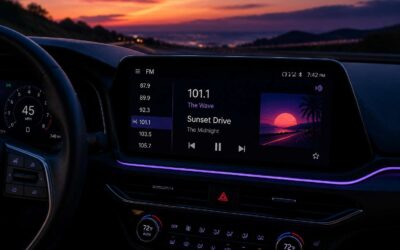
The car radio is no longer the only set of ears in the cabin. A listener in Johannesburg might start a commute on FM and finish it on a stream through the same dashboard. That crossover is where zenith radio advertising either keeps up or fades.
Future-proofing means treating terrestrial broadcast and connected devices as one continuous audio journey, not separate planets. The same campaign can trigger different creative based on whether someone is on a tuner or a podcast app. A bakery in Cape Town can serve a breakfast message on AM and a lunch reminder via a smart speaker.
- Deliver consistent frequency across both paths
- Measure each environment without double-counting
- Adjust creative weight based on live engagement
Bridging these worlds requires a unified data layer. The goal is not replacement; it is continuation. Zenith radio advertising thrives when the story follows the listener from the dial to the device and back again.
Ethical Considerations and Managing Ad Recall Decay
Ad recall decay weakens campaign impact. A spot heard on AM disappears from memory within hours unless reinforced. Ethical frequency management becomes the first priority. Zenith radio advertising must balance reach with restraint. Overloading a listener across FM, podcast apps, and smart speakers triggers fatigue, not loyalty.
We run three-week recall checks and rotate creative based on response. One campaign in Cape Town reduced exposure by 20% yet lifted recall by 15%. That is the power of disciplined pacing.
- Track attention decay per platform
- Set maximum daily impressions for each listener
- Retire creative once recall plateaus
Respecting the listener’s cognitive load keeps zenith radio advertising effective beyond the first listen.


0 Comments